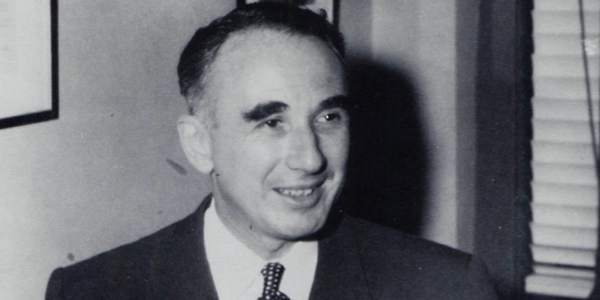

Chaplain Has His Beard And Wears It Too

After a long legal battle with the U.S. Army, Rabbi Menachem M. Stern will finally be commissioned as a First Lieutenant to serve as a Jewish chaplain.

The story made news back in 2009 when he was appointed as an Army Reserve chaplain only to have the appointment rescinded the following day. The Army had refused to permit Rabbi Stern to enter the Chaplaincy despite the fact that a Chaplain Accession Board had found him fully qualified to serve, arguing that his beard would violate uniform and appearance regulations.

Since Lubavitchers view a beard as a halachic requirement, Stern felt it necessary to file suit in Federal Court when it became clear that the Army would not grant an exception to policy. While an exception to the policy is rare, it is not unprecedented. Over thirty years ago, a one-time exception for a beard was granted to Rabbi Jacob Goldstein by then Army Chief of Staff, General Bernard Rogers. Rabbi Goldstein continues to serve with distinction in the Army Reserve as a chaplain in the rank of Colonel.

The Army recently settled with Rabbi Stern out of court agreeing to commission him and grant him a waiver for his beard. As a result, the swearing in ceremony will take place at 10 AM, Friday, December 9, 2011. You can even watch the ceremony LIVE via www.aleph-institute.org/stream.

One interesting angle that has been argued against the Army’s policy is the fact that a large number of special forces troops in Afghanistan (and elsewhere) are wearing beards for operational reasons. Certainly we know that uniform standards are a little different in the field than in garrison, but it is a valid point.

A bigger question is whether this will open up the door for more Chabad rabbis to serve as chaplains. There is no doubt a shortage of Jewish chaplains in the military, and there are surely a plethora of Chabadniks who would jump at the outreach opportunity to serve in such positions.

While it might sound like a perfect fit, there are some that argue the majority of Jews serving do not “align” with Chabad-style Judaism. In addition, the chaplain corps has long been dominated by Conservative and Reform rabbis, and there would likely be some push back from that side. In the end, I hope that we can find some happy middle ground where rabbis from all sects can serve the Jewish troops who so desperately need them. The Aleph Institute has played a larger role in military chaplaincy and religious support in recent years, and I have seen it as a tremendously positive move. If this does wind up opening doors, I’m confident that it will be a success for everyone involved.

I wish Rabbi Stern a hearty mazal tov on his upcoming appointment. May he serve us all proudly.