You are here: Forum Home  >  Main Forums  >  Religious Chat  >  Thread
   
 
Religious in basic training?
12/12/05 at 0051   Ignore ]  
Newbie
Rank
Total Posts:  2
Joined  2005-12-08

I posted in the wrong area it seems. I have recently decided the best thing to do is to join the service but I have some hesitations. I see from someone elses post that one cannot keep Shabbas in basic training. However what about other religious issues? How does one keep kosher in basic? How does one daven on a regular basis in basic training? Can you wear a Kippa or tzitzis in basic training? Is teffilin allowed in basic training? If not how does a religious Jew resolve those issues for the 6 weeks of BT? Can they even be resolved? What about in other branches of the service besides the Army? Is anyone one branch more tolerant of us Yids? I would also love to see some of the stories of religous Jews on how they made it thru the trenches of BT. What do you think?

 
12/12/05 at 1248   Ignore ]   [ # 1 ]  
Administrator
Avatar
RankRankRankRank
Total Posts:  59
Joined  2004-05-16

Nachum, I’ll try to hit all of your questions.

Keeping kosher: This should be technically possible.  However, it will require a good deal of prep work on your part.  Before heading to boot camp, I would contact the Jewish chaplain on base (or the nearest one available) and let him or her know about your situation.  They may be able to provide you with kosher MREs for the duration of training.  That’s the only 100% way to keep kosher.  I know guys that just ate vegetarian at the mess hall, but that may not be acceptable to you.  Realize that you will probably take some flak for having special meals for you.  It’s not because your Jewish, but rather that you are doing something “out of the ordinary”, which is not liked by any drill instructor.  But hey, if it’s important to you, deal with it for the short time you’re there and then you can spend the rest of your time in the Army making your own food choices.

Davening: 3 times a day might be difficult, but you can (usually) get up before reveille for morning prayers, and you can usually find time before or after lights-out for an evening session.  Both of these will be in the dark, but it’s better than nothing.  Also, you should work on your speed-davening.  I wouldn’t count on more than a 10 minute period each time.

Kippah & Tzitzit: You can probably wear a kippah under your cover, but that might be something you want to talk to the Jewish chaplain about ahead of time.  There are some activities that it just would not be practical for though.  Realize that you will have a completely shaven head and I’ve never seen a kippah that could stay on during the kind of movement you are sure to experience at boot camp.  Tzitzit is do-able if you can keep it out of sight.  I know you have some concerns of where it will touch when tucked in, but I’m sure you can get creative on ways to keep your fringes in line.

Tefillin: I’m sure it’s allowed, but you may not have the time to wrap whenever you like.  Again, refer to the davening answer.  You will have the opportunity to attend Jewish services on most Sundays.  It ain’t the ideal scenario, but it will allow for much more devotion to prayer and such.

The advice I give most people is that you will have to compromise on some things.  That’s a part of military life, no matter what your religion is.  If you are unwilling to compromise for 6 weeks, then the military is not for you (which is OK).  Once you make it through basic training, it gets progressively better until you are eventually in the regular forces and then you can make a lot of these decisions for yourself.  With a few occasional exceptions, you should be able to observe most of the mitzvot.  It often takes some advance planning and some additional effort on your part, but it can be done.

Which service: I don’t know of any service being more tolerant of Yids, but you may want to consider the length of boot camp and initial training.  That’s the toughest part (observance-wise), so if you can keep that short, it should make things easier.  Also, you might want to consider picking an MOS (job) that keeps more regular hours.  Everyone deploys, but there are always jobs that will require more weekend duty, etc.  You might also consider becoming a chaplain assistant.  It’s not as big of a process as becoming a chaplain, but you still have first-hand access to religious resources.

I hope some other people will chime in here with some other experiences.  In the meantime, here are a few examples of people who were successful in this endeavor:

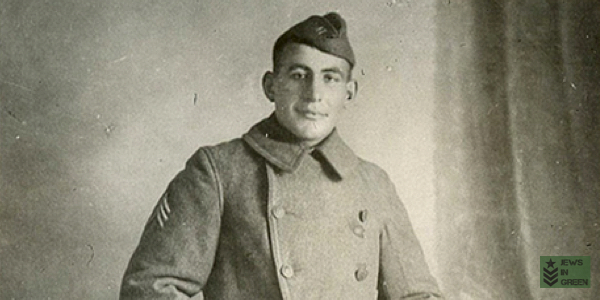
Joe Kashnow
Mike Ekshtut

 
12/14/05 at 1359   Ignore ]   [ # 2 ]  
Salty Dog
RankRankRankRank
Total Posts:  66
Joined  2005-08-22

Just curious about the Kippah.  Why would the military go through the bother of having a camouflage kippah available for purchase if it’s not allowed?

It happens to be one of the more popular item, we are shipping them by the dozens in both the Woodland and Desert Camouflage Fabric.  Now they are considering adding Marine and ACU choices as well.

Dee
Jewish Prime Vendor

 
12/28/05 at 0431   Ignore ]   [ # 3 ]  
Newbie
Rank
Total Posts:  5
Joined  2005-09-07

Well I finally made it to BT after some extensive delays.  Lets just say MEPS is repository for people who either are total morons or gleeful sadists.  I’m home on Exodus now, and I had some questions similar to yours.  A lot of things will depend on yourself, your Drill Sergeants and your company commander, so some things that were true for me might not be for you.
First, I didn’t even bother bringing my tefillin or tzitzit.  I just assumed(maybe wrongly) that I wouldn’t be able to wear them.  Kippas however are OK according to AR 670-1.  People will stare and you’ll constantly be asked about it, but you will be able to wear it.
Davening is really how Lt. Rubin explained it.  You’ll have to wake up early and stay up late just to daven twice, which can be difficult because you will be tired at the end of most days.
Two days after getting to reception the Dining Facility had received the kosher MRE’s they had ordered for me.  When I got to Basic though the Drill Sergeants wouldn’t let me eat them in the DFAC any more.  They told me that at Basic, Shabbos and kosher don’t exist anymore.  Every meal for me is now cereal, fruits and vegetables.  I still get the kosher MRE’s though when we’re out in the field.

A lot of what happens to you in Basic depends on you as I said before.  If you show your Drill Sergeants you’re serious about the Army and you are willing to work hard and do what they say, they will do almost anything to help you in your observance.  Of the hundreds of people I’ve met in BT so far only one has challenged my ability to balance being a soldier and being Jewish.  All the others, including the many who had never before met a Jewish person, and there were a lot of them, have treated me with respect and have asked curiously about my religion.  My 9 weeks of Basic Training are shaping up to be some of the most challenging and most fun weeks of my life.

 
01/23/06 at 0759   Ignore ]   [ # 4 ]  
Newbie
Rank
Total Posts:  9
Joined  2006-01-21

Nachum,

Here are some of my experiences from my BT in the Australian Army Reserve. Now you can imagine most gentiles in Aussie have little contact with Jews.

Kashrut: They ordered for me pre-cooked catered meals - no prob. Field Rations - no kosher available, I suffice with vegetarain menu ie museli bars, chocolate, baked beans, tomato soup, cookies....

Kippa: no problem worn everywhere, only thing is we wear a hat almost everwhere and hence - don’t need kippa, when wearing hat.

Beard: I wear a trimmed beard, this is allowed in the Australian Army for religious reasons.

Tzizits, Tefilin and davening: no problem can be taken and worn. I can normally find 20min or so in the morning to do a quick daven, it might mean missing part of breakfast etc

Shabbos: Is a problem, however I explain to them that I cant write or fire on shabbos and if its not an exam so far I’ve been exempt. Note writen exams I’ve always negotiated to do either b4 or after shabbos. The problem is getting qualified on weapons and range shoots are normally done on Saturday. They don’t compromise here.

Again I agree that you must be prepared to compromise. I think its bloody awsome that Jews serve in the military we need to be there and when the gentiles sees Jews keeping their faith and performing well it has a good impression.

Best of luck…

 
02/08/06 at 0055   Ignore ]   [ # 5 ]  
Newbie
Avatar
Rank
Total Posts:  4
Joined  2006-02-08
Dee - 14 December 2005 01:59 PM

Just curious about the Kippah.  Why would the military go through the bother of having a camouflage kippah available for purchase if it’s not allowed?

It happens to be one of the more popular item, we are shipping them by the dozens in both the Woodland and Desert Camouflage Fabric.  Now they are considering adding Marine and ACU choices as well.

Dee
Jewish Prime Vendor

I know that camo is not allowed in AF Uniform, you have to wear a dark blue or black one, and it IS allowed just about anywhere, but there are a few hurdles, and most chaplains don’t even know about how to do it.... but after a little trial and error, I have a decent form letter you can use that should be good for any AF unit…